FTTP business broadband
Fibre runs directly to the premises where available. For many small and medium businesses it provides strong download performance at a much lower cost than a dedicated circuit.
Chorley businesses have very different connectivity needs, from offices using cloud systems and VoIP to warehouses and multi-site operations where downtime has an immediate impact. Bluebox helps you choose between FTTP, leased lines, Starlink and backup connectivity based on availability, workload, resilience and budget rather than headline speed alone.
Let's have a conversation →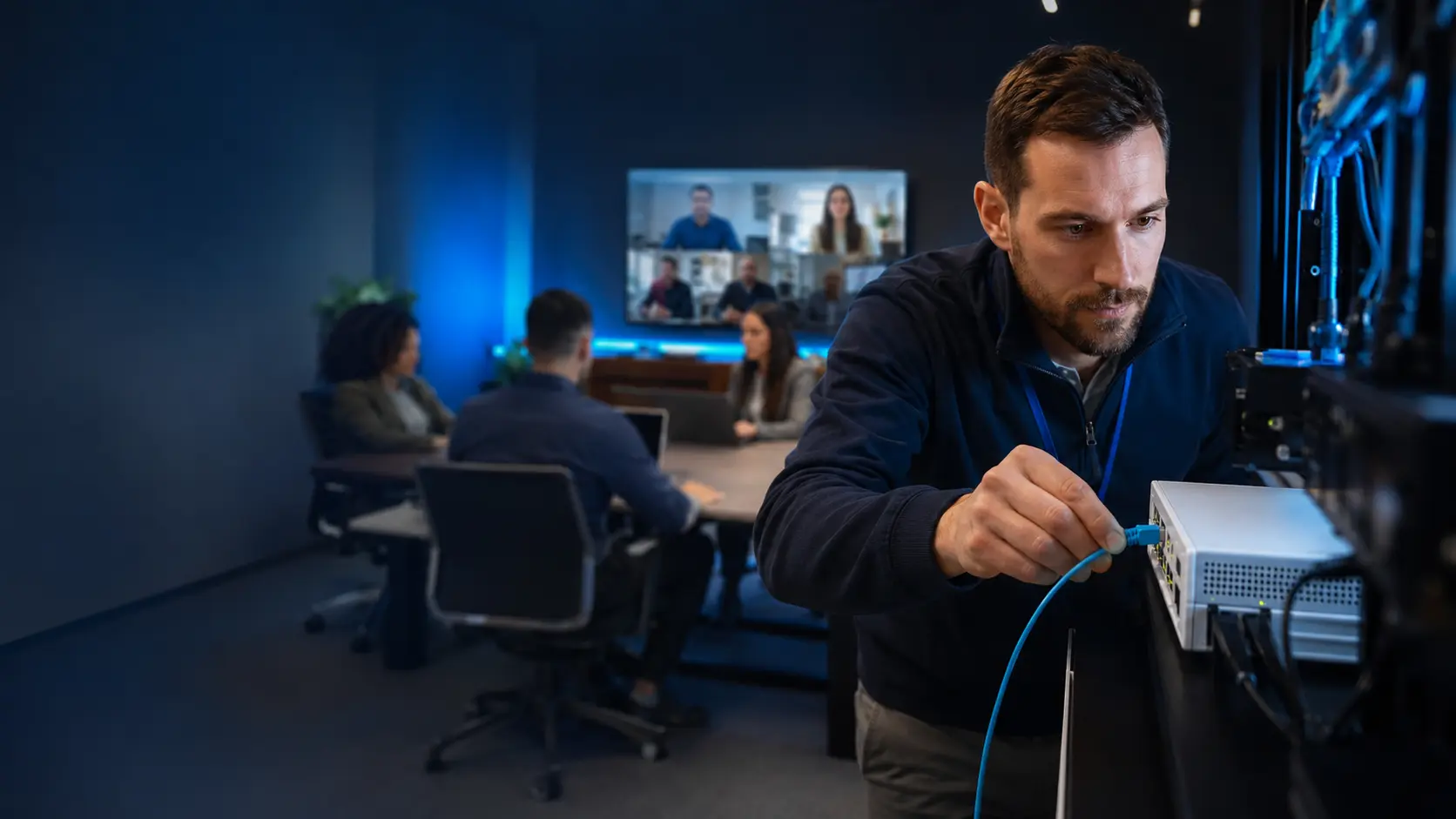
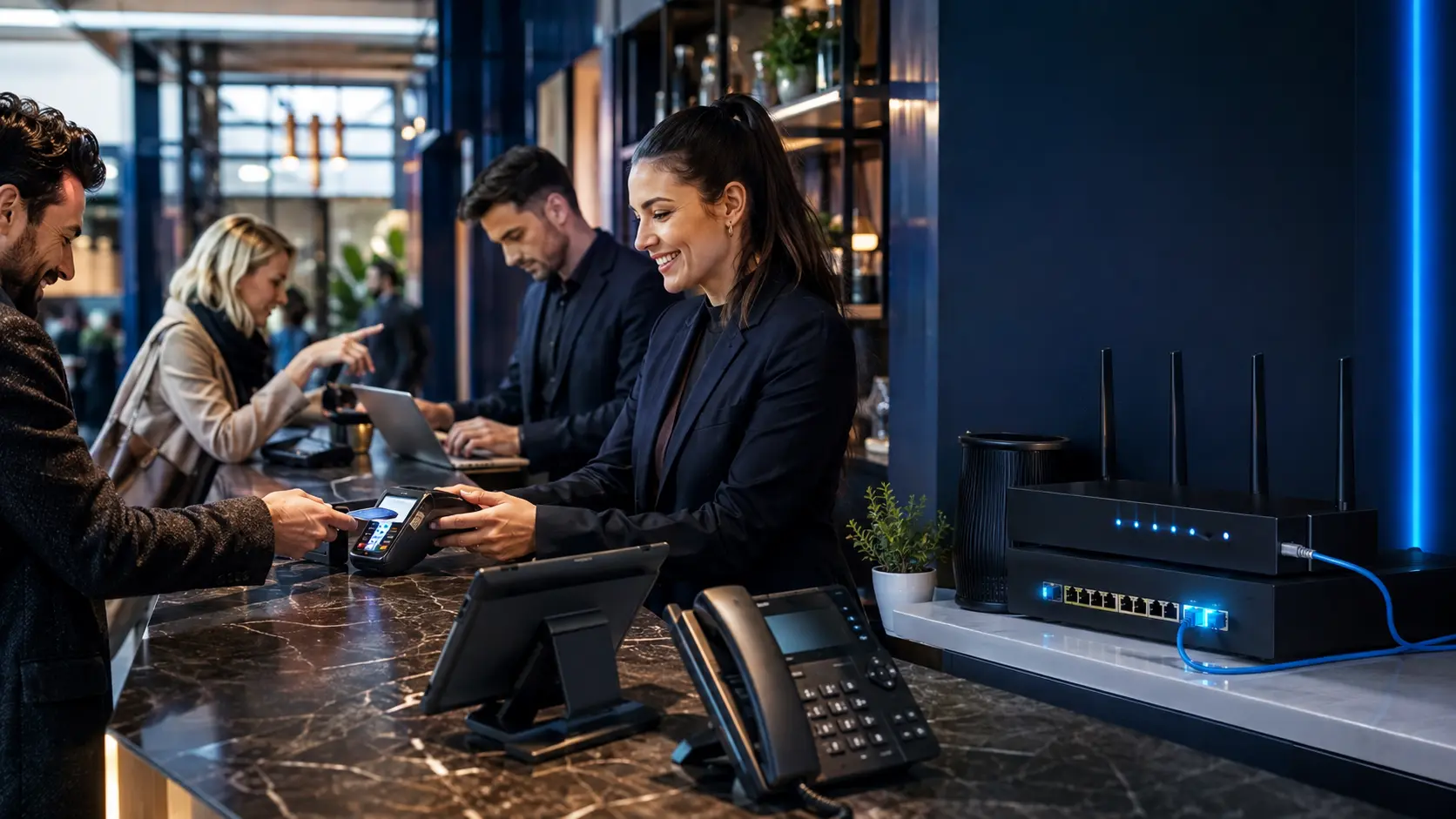
Cloud systems, card payments, VoIP phones, Microsoft 365, remote access and customer-facing applications have made connectivity business-critical. The correct service is about performance, resilience, support and risk as well as headline download speed.
Fibre runs directly to the premises where available. For many small and medium businesses it provides strong download performance at a much lower cost than a dedicated circuit.
A dedicated business connection with symmetrical bandwidth and business-grade service commitments. Well suited to organisations where connectivity is critical or upload performance matters.
Satellite connectivity can be valuable for rural or difficult sites, temporary premises and as an alternative route where a fixed-line failure would otherwise remove connectivity completely.
A mobile-data connection can give a router a secondary path to the internet if the primary fixed line fails. Suitability depends on local signal, usage and the applications that must remain online.
There is no single winner. They solve different problems.
| Connection | Best fit | Performance model | Resilience / support | Things to consider |
|---|---|---|---|---|
| FTTP | Most SME offices, retail, professional services and general cloud use. | Fast full-fibre access but normally not a dedicated uncontended circuit. | Business support varies by provider and package. | Availability, upload speed, static IP needs and whether backup is required. |
| Ethernet leased line | Mission-critical sites, heavier cloud use, larger teams and businesses needing strong upload performance. | Dedicated and symmetrical bandwidth on the chosen service. | Typically supplied with formal SLA and repair commitments depending on carrier. | Longer delivery process, site survey, bearer capacity and contract term. |
| Starlink | Rural, difficult, temporary or geographically diverse backup scenarios. | Satellite service; speeds can vary with plan, congestion and conditions. | Can provide a physically different route from local fixed-line infrastructure. | Clear sky view, hardware location, data plan and whether it is primary or backup. |
| 4G / 5G | Automatic backup, rapid deployment and smaller sites. | Mobile network performance varies by location and network loading. | Useful as a second technology where fixed line is primary. | Indoor signal, antenna position, data allowance and failover configuration. |
Two broadband services can still share ducts, exchanges or local infrastructure. Where connectivity is critical, the resilience design should consider the route and technology as well as the supplier name.
FTTP with 4G/5G failover can be a practical SME resilience option.
A leased line can be paired with a separate broadband or mobile backup circuit.
Starlink can create a route that does not depend on the same local underground fibre path.
The router and failover configuration matter just as much as having the second circuit.
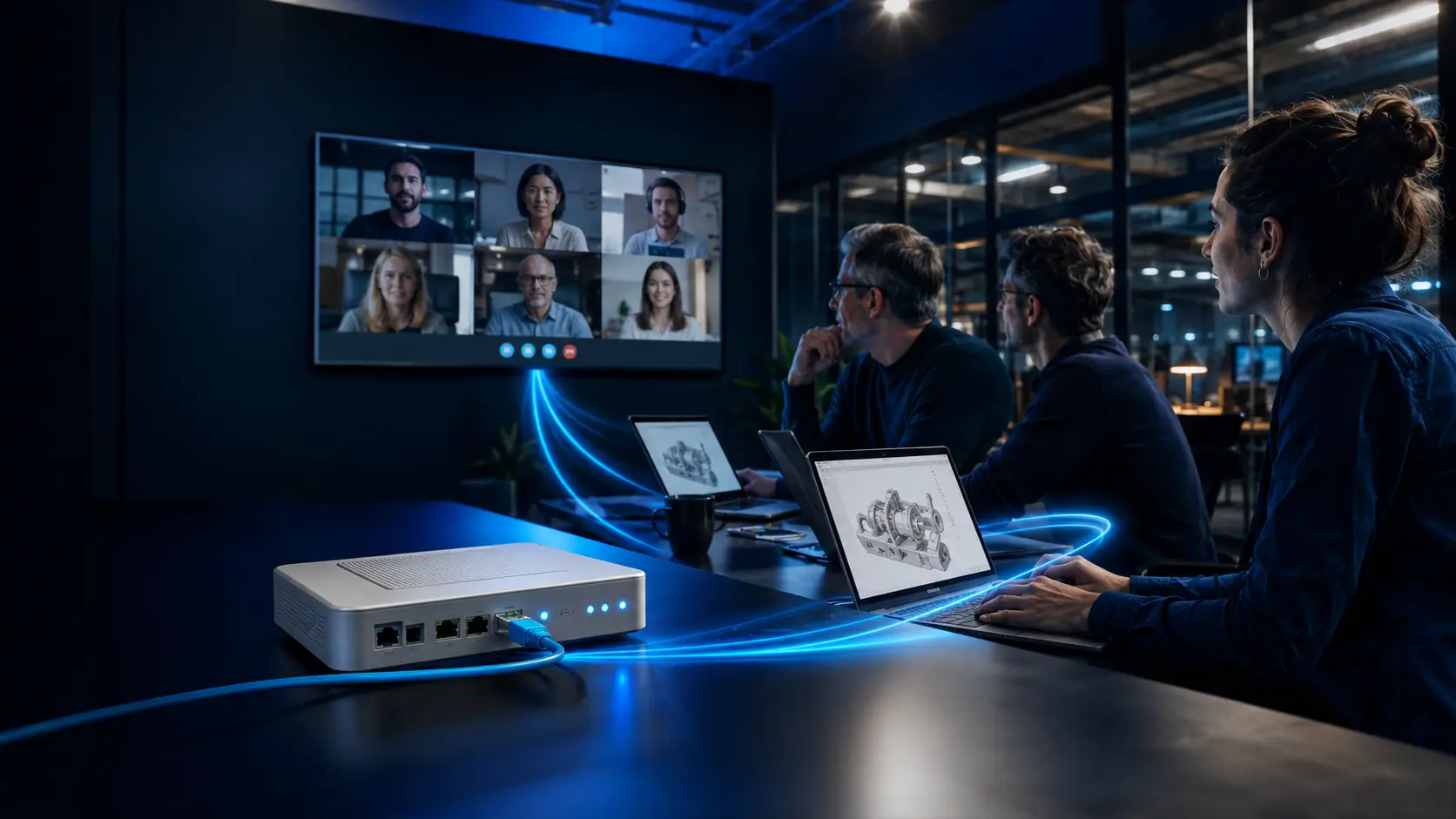
A business can buy a very fast internet service and still have a poor experience if the Wi-Fi or internal wired network is the bottleneck.
FTTP brings fibre directly to the business premises instead of relying on copper for the final section of the connection. Where available, it can deliver high broadband speeds and is often the right balance of performance and cost for small and medium businesses.
It is still important to look beyond download speed. Upload requirements, support level, static IP addressing, voice traffic and the impact of an outage can all affect which FTTP product is appropriate.
A leased line is designed for businesses that want dedicated bandwidth rather than a standard shared broadband service. Upload and download speeds are symmetrical on the selected service, and carriers normally attach formal service-level and repair commitments to the circuit.
Leased lines are particularly relevant where cloud systems, large data transfers, hosted voice, multiple users or the financial impact of downtime justify a higher-grade connection.
Starlink can be extremely useful where terrestrial connectivity is poor, slow to deliver or vulnerable to the same physical route. It can support fixed business sites and provide a diverse backup path because the access link reaches the premises by satellite rather than the local fibre or copper network.
It is not automatically better than fibre. A clear view of the sky is required and performance varies with service plan, network conditions and congestion. We therefore position Starlink around the site and resilience requirement rather than as a universal replacement for FTTP or Ethernet.
Business routers can use a mobile-data service as a secondary WAN connection and switch traffic over when the primary circuit fails. This can be a cost-effective way to keep key cloud and communications services available during a fixed-line fault.
The design needs to account for mobile coverage, antenna position, data usage and which applications should continue during failover.
Before recommending a service, the useful questions are operational ones.
User count alone is not everything, but it helps us understand concurrent cloud, voice and video demand.
Backups, cloud files, video, hosted applications and off-site systems can make upload bandwidth much more important than it first appears.
If tills, phones, systems or customer service stop, resilience may matter more than simply purchasing a faster primary circuit.
FTTP and Ethernet availability, construction requirements and delivery times are location-specific, so every site needs checking.
Bluebox provides business broadband and connectivity across Chorley, including FTTP, Ethernet leased lines, Starlink, routers and resilient backup options. Chorley is close to our Horwich base, making it a straightforward area for surveys, installation coordination and ongoing support.
We can also review the internal Wi-Fi and network if a fast connection is not translating into good performance for users around the building.
We confirm what fixed-line and alternative services are available at the business address.
Users, applications, upload demand, static IP needs, voice traffic, resilience and budget all shape the recommendation.
We coordinate the circuit and the supporting router/network work so the connection can actually be used properly when it goes live.
FTTP is full-fibre broadband delivered to the premises and is often the most cost-effective option for SMEs. A leased line is a dedicated service with symmetrical bandwidth and formal business service commitments, making it better suited to more demanding or mission-critical environments.
Availability is checked against the actual business address. If FTTP is not available, we can review other fixed-line, Ethernet, mobile or satellite options and recommend the most practical route based on performance, delivery time, resilience and budget.
It can be. Hosted voice does not automatically require a leased line. The connection needs adequate bandwidth, low enough latency, sensible router configuration and a healthy internal network. Resilience may also be important if phones are business-critical.
Typical reasons include dedicated symmetrical bandwidth, predictable performance, high upload requirements, stronger service commitments and the operational cost of broadband downtime.
No. The physical circuit or bearer and the service bandwidth can be sized separately. A business might initially take a lower committed speed on a larger bearer to leave room for future growth, depending on the carrier product.
Yes in appropriate locations, but we assess it by use case. It is especially useful for difficult sites, temporary connectivity and diverse backup. Performance can vary and the dish needs a suitable clear view of the sky.
Potentially, yes. One attraction is that the access path is satellite-based rather than relying on the same local underground fixed-line route. The router and failover design still need to be configured correctly.
That depends on what happens to the business during an outage. If phones, tills or cloud systems must remain available, a secondary connection can be inexpensive compared with the cost of downtime.
The bottleneck may be inside the building. Wi-Fi coverage, old switches, cabling, overloaded uplinks or device issues can all create a poor experience even when the internet circuit itself is performing well.
Static IP options depend on the selected service and provider. If remote access, firewalls, hosted services or other applications require one, we include that requirement when choosing the connection.
Delivery is site-specific and can take longer than standard broadband because surveys, network build or construction work may be required. We would provide the expected delivery information for the actual address and carrier option.
It depends on the address, available network, speed, service type and contract term. We prefer to check the site first rather than advertise a headline price that may not apply to the premises.
Yes. The router, WAN configuration, failover and local network are often part of getting the best result from the connectivity service.
Yes. Bluebox supports businesses across the wider North West, including Bolton, Bury, Chorley, Wigan and Preston, as well as other parts of Greater Manchester and Lancashire.
If the connection is fast but users are still struggling, the bottleneck may sit in the cabling, switches, Wi-Fi or phone environment. Bluebox can look at the complete path.
Tell us what is happening now, how dependent the business is on the internet and what an outage would mean. We can check the options at your address and explain which route makes sense without burying you in carrier terminology.
Let's have a conversation →